
FREE Postage via Royal Mail | 10% OFF On Orders Over £20
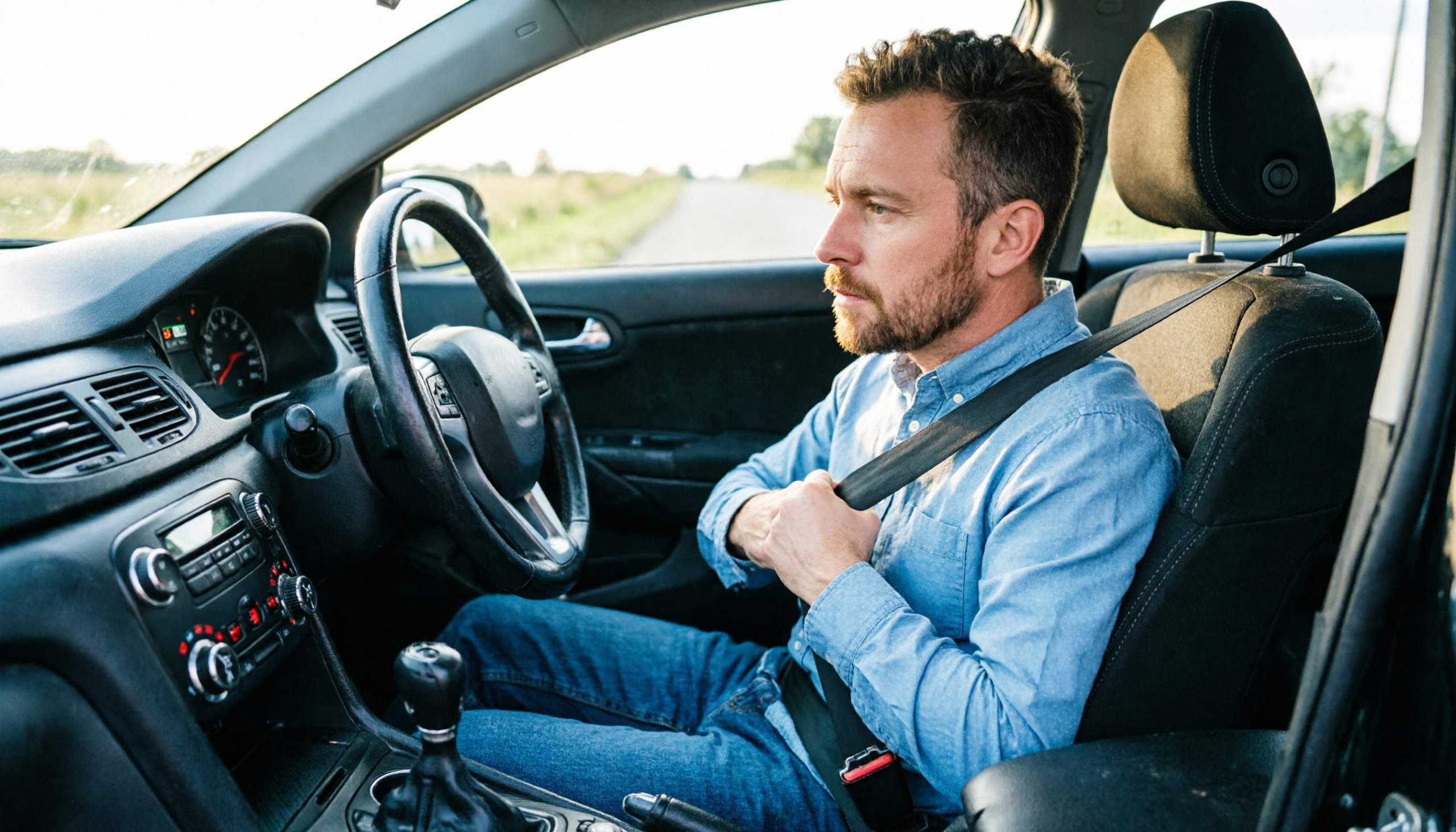
If your seat belt is too tight to buckle comfortably, you’ve probably wondered whether a seat belt extender is actually legal to use in Canada. The short answer: there is no Canadian law that bans seat belt extenders outright — but the rules around wearing your seat belt properly are strict, and they’re enforced province by province. Here’s what you need to know before you buy one.
Canada splits road safety regulation between two levels of government, and this is where most of the confusion comes from.
Transport Canada handles the federal side. Through the Motor Vehicle Safety Act and the Canadian Motor Vehicle Safety Standards (CMVSS), it sets the standards for how vehicles and their restraint systems are manufactured. Every car sold in Canada must meet these standards.
The provinces and territories handle everything about how you actually drive. Seat belt legislation is left to the provinces — each one sets its own fines, demerit points, and enforcement rules. This means the answer to “is it legal?” can vary depending on whether you’re in Ontario, Alberta, or British Columbia.
Every province requires vehicle occupants to wear a seat belt that is properly worn and securely fastened. That’s the key phrase. An extender that lets you buckle up properly keeps you on the right side of the law; driving unbuckled — or with a belt hanging loose across you — does not.
All provinces in Canada have primary enforcement seat belt laws. That means a police officer can pull you over for a seat belt violation alone, without needing another reason. In Ontario, the OPP laid 13,560 seatbelt charges in a single recent year, so this isn’t a law that sits unenforced.
Here’s the grey area. Transport Canada regulates restraint systems themselves, but it has no specific regulation or standard for third-party aftermarket extender products. It has published consumer notices warning that some aftermarket products used with child restraint systems can be a safety risk — but that’s about products added to infant and child seats, not about adult seat belt extenders.
The practical upshot:
Because enforcement and penalties are provincial, we’ve broken the rules down by province:
Fines range from $75 in Yukon to $299.65 in Manitoba, so it pays to know your own province’s number.
An extender is legal to use when it helps you wear your seat belt the way the law intends: lap belt low across the hips, shoulder belt centred on the chest and shoulder — never behind your back or under your arm. A few common-sense rules:
There’s no specific offence for using an extender. Police ticket for not wearing a seat belt, or wearing one improperly. If your extender lets you buckle up properly, you’re complying with the law’s intent.
Airlines set their own policies for cabin equipment. Some Canadian carriers provide extenders on request; if you prefer your own, check with the airline before you fly, since cabin rules differ from road rules.
No. Unlike medical seat belt exemptions (which do exist in some provinces and require documentation), an extender is just a consumer product. No note or permit is required.
There’s no standard Canadian rule on this. Insurers assess whether the restraint was worn properly. Using a properly fitted extender is far better for any claim than being unbuckled.
A seat belt extender costs far less than a single ticket — and it’s the difference between buckling up and not. If your factory belt is too short or too tight to fasten comfortably, an extender is the practical fix:
Check your buckle type against the product’s compatibility notes before ordering, and you’ll be buckled up — legally and comfortably — within days.
